Build Your Dream Website – with Website Wala






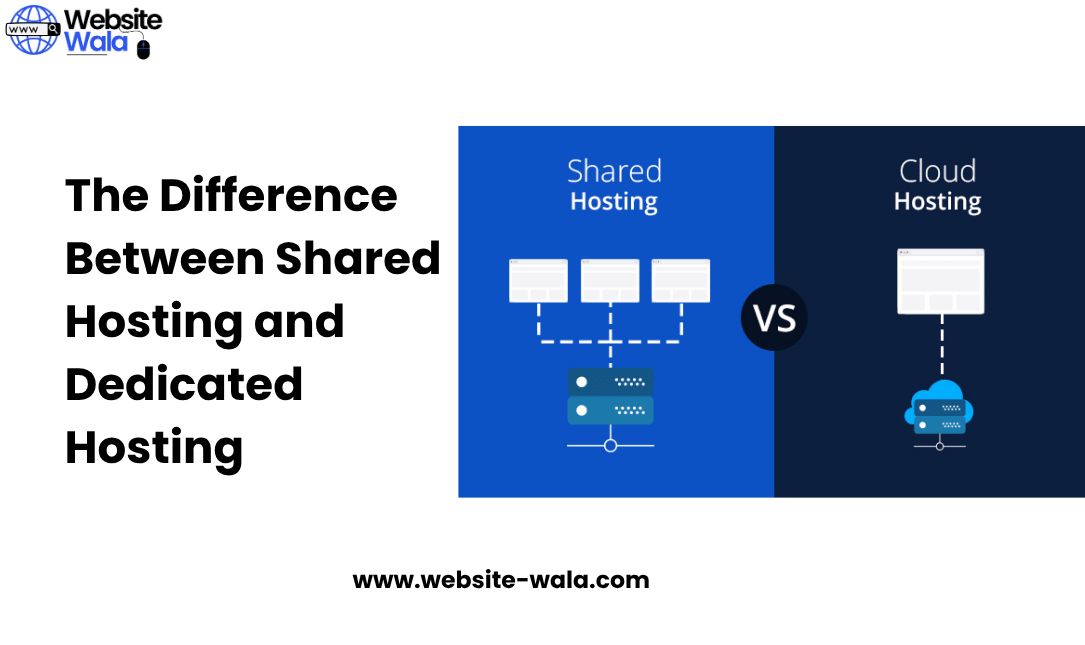
Discover The Difference Between Shared Hosting and Dedicated Hosting in detail. Learn how performance, security, and resource allocation vary between these hosting solutions.
The Difference Between Shared Hosting and Dedicated Hosting
Choosing the right web hosting solution is one of the most crucial decisions for anyone starting or expanding a website. Understanding The Difference Between Shared Hosting and Dedicated Hosting helps determine how your website performs, how secure it is, and how easily it can handle growth. Whether you’re launching a personal blog, an eCommerce platform, or a corporate website, the type of hosting you choose directly affects your website management, website performance, and website security.
This article explores The Difference Between Shared Hosting and Dedicated Hosting in detail, examining aspects like resource allocation, performance, and security to help you make an informed decision.
Understanding Shared Hosting
To grasp The Difference Between Shared Hosting and Dedicated Hosting, it’s important first to understand what shared hosting entails. In shared hosting, multiple websites are stored on a single server. This means that server resources such as CPU, RAM, and bandwidth are shared among various users.
Because of this shared environment, shared hosting is often the most affordable option for small websites and beginners. Hosting providers manage all server maintenance, updates, and security patches, allowing users to focus on website management rather than technical complexities.
Key Benefits of Shared Hosting
-
Cost-effective: Shared hosting plans are budget-friendly and ideal for startups or small businesses.
-
Ease of use: Hosting providers offer user-friendly dashboards and one-click installations for CMS platforms like WordPress.
-
Low maintenance: The hosting company handles server hosting responsibilities, including software updates and security patches.
Drawbacks of Shared Hosting
While shared hosting is great for beginners, the limited server resources can lead to slower website performance when traffic increases. Additionally, if one website on the shared server experiences security issues or high traffic spikes, others may be affected too. Thus, website security and performance can be compromised under certain conditions.
Understanding Dedicated Hosting
When exploring The Difference Between Shared Hosting and Dedicated Hosting, the other major type to consider is dedicated hosting. In this setup, one physical server (known as a dedicated server) is exclusively allocated to a single client. This means you have full control over all server resources, configurations, and security measures.
Dedicated hosting is generally used by large businesses, high-traffic websites, or organizations that require enhanced website performance, custom configurations, and maximum reliability.
Key Benefits of Dedicated Hosting
-
Full control and customization: You can configure the server hosting environment to meet your exact requirements.
-
Improved performance: Since all server resources are dedicated to your site, website performance is consistently high.
-
Enhanced security: With full access and isolation, website security is significantly stronger compared to shared hosting.
-
Scalability: Dedicated servers easily handle heavy traffic and can be upgraded as needed.
Drawbacks of Dedicated Hosting
The primary downside is cost. Dedicated hosting plans are much more expensive than shared hosting. Additionally, managing a dedicated server often requires technical knowledge or hiring IT professionals for ongoing website maintenance.
The Difference Between Shared Hosting and Dedicated Hosting: A Detailed Hosting Comparison
To fully understand The Difference Between Shared Hosting and Dedicated Hosting, let’s compare them across the most crucial factors that affect your web hosting solution.
1. Resource Allocation
In shared hosting, multiple users share the same server resources. This shared setup means you’re essentially renting a small part of a large house — and if one roommate uses too much electricity or bandwidth, everyone’s experience suffers.
In dedicated hosting, you get the entire server to yourself. All server resources, including RAM, CPU power, and storage, belong solely to your website. This leads to predictable and optimized performance.
2. Performance
Performance is one of the clearest indicators of The Difference Between Shared Hosting and Dedicated Hosting. Shared hosting can sometimes result in slower load times, especially during peak usage hours, due to resource sharing. In contrast, a dedicated server ensures consistent website performance, even under heavy traffic loads.
3. Security
When it comes to security, shared hosting poses higher risks since multiple users share the same environment. A vulnerability in one site could potentially affect others. On the other hand, dedicated hosting provides a private environment, allowing for stronger website security measures, such as custom firewalls, DDoS protection, and unique access controls.
4. Scalability and Flexibility
If your website experiences rapid growth, shared hosting may become limiting. Upgrading to a dedicated hosting plan provides better scalability, allowing you to expand resources as needed. Dedicated hosting also allows full control over software, operating systems, and configurations — features often restricted in shared hosting environments.
5. Cost
Cost is another essential aspect of The Difference Between Shared Hosting and Dedicated Hosting. Shared hosting is affordable and best suited for beginners, while dedicated hosting offers superior performance and control at a higher price point. The investment in dedicated hosting often pays off for businesses that rely heavily on uptime, speed, and security.
6. Technical Management
With shared hosting, the hosting provider manages most technical aspects such as server updates, maintenance, and backups. In dedicated hosting, however, the user (or their IT team) manages the server. While this offers more control, it also requires greater technical expertise in website management and website maintenance.
When to Choose Shared Hosting
Shared hosting is perfect for:
-
Beginners launching their first website
-
Small businesses with limited budgets
-
Blogs, portfolios, or low-traffic sites
-
Users who prefer hands-free hosting services
If you want an affordable, low-maintenance web hosting solution, shared hosting is an excellent place to start. It allows you to get your website online quickly without worrying about complex server hosting configurations.
When to Choose Dedicated Hosting
Dedicated hosting is best suited for:
-
Large businesses or high-traffic websites
-
eCommerce platforms requiring advanced security and fast performance
-
Organizations handling sensitive customer data
-
Developers needing full control over server resources
If uptime, security, and performance are critical to your online success, a dedicated server is the best investment. It ensures your website operates efficiently, securely, and without interference from other users.
Choosing the Right Web Hosting Solution
Deciding between shared and dedicated hosting comes down to your website’s specific needs, technical expertise, and budget. If you’re starting small and want an affordable, easy-to-manage option, shared hosting is ideal. But if your website demands top-tier website performance, security, and full control, dedicated hosting is the superior choice.
In essence, The Difference Between Shared Hosting and Dedicated Hosting lies in how server resources are allocated, who manages them, and how each setup affects your website’s overall performance and reliability.
Final Thoughts on The Difference Between Shared Hosting and Dedicated Hosting
Understanding The Difference Between Shared Hosting and Dedicated Hosting is essential for anyone serious about website growth and stability. Shared hosting offers simplicity and affordability, making it ideal for beginners and small sites. Dedicated hosting, however, provides the power, flexibility, and website security needed for large, high-traffic sites or businesses with specialized requirements.
When selecting from various hosting providers, carefully review their hosting plans and hosting services. Evaluate your website’s size, traffic expectations, and budget before committing. By understanding The Difference Between Shared Hosting and Dedicated Hosting, you can make an informed choice that supports both present needs and future growth in your online journey.